
Written by Eoghan O'Connell on 19 Dec 2025
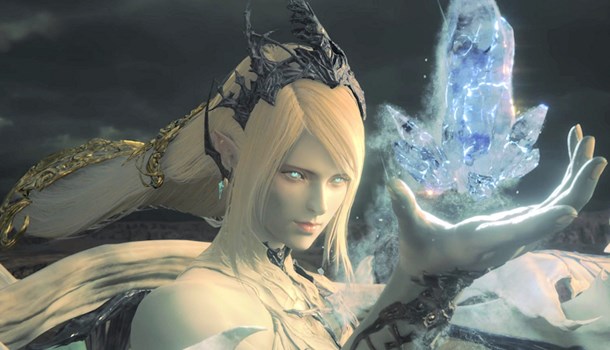
I’ve been recently playing Final Fantasy XVI and one question keeps circling in my mind: What is Final Fantasy? As someone who considers the franchise to not only be one of their favourites but an integral part of how their understanding of video games came to be, it seemed like the answer was obvious at first. However, it was only as I pondered what this actually meant that I came to the realisation that what makes up a Final Fantasy game is actually rather complex and, most importantly, inconsistent.
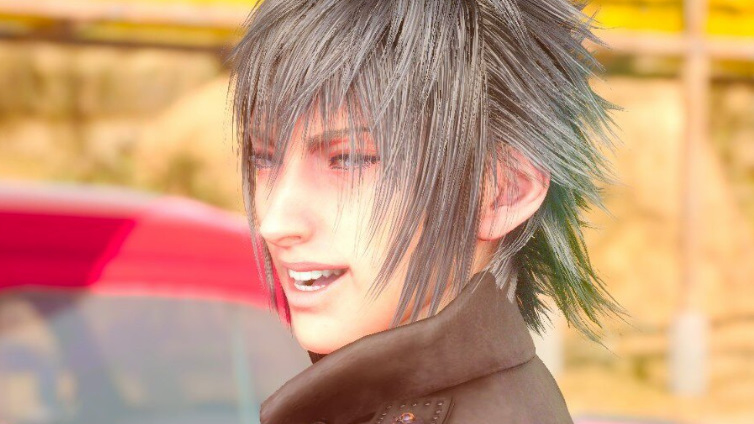
When it comes to the question of "What is Final Fantasy?", the debate often boils down to some version of storytelling vs. gameplay. It’s understandable as this conflict has been present since the series’ inception. Series creator Hironobu Sakaguchi famously stated “I don't think I have what it takes to make a good action game. I think I'm better at telling a story.” which highlights the series’ strong storytelling identity. Even in the modern day, developers continue to highlight this with those who worked on XVI stating that Final Fantasy is about epic storytelling. When the developers, including the original creator, highlight story so strongly, it certainly leaves a strong impression that this is what the core identity of the franchise is about.
No we do not!
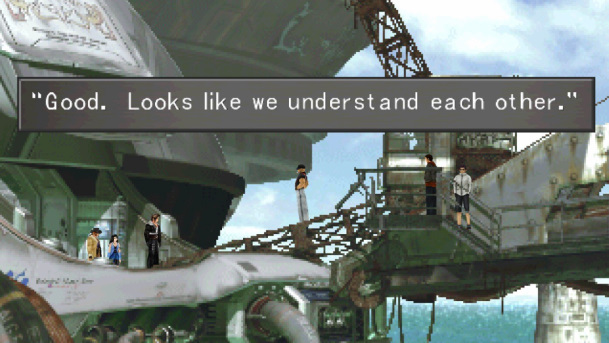
However, I do take issue with this being the aspect that defines the franchise because of a simple fact, it’s vague. When I look at the series over the years, I see stories so different that many people might struggle to see them as part of the same franchise and tonal shifts so wild that they inevitably provoke discussion of whether it counts as Final Fantasy. The world of Final Fantasy VII and the issues that it handles are wildly different from, say, that of Final Fantasy IV. VII deals with corporate exploitation and the destruction of nature while IV handles redemption for past actions and how you should act when given unjust orders. Even if we take a single era such as PS1, arguably the peak of the Final Fantasy franchise’s popularity, many people complained of the tonal whiplash of Final Fantasy IX which, ironically, was a return to the tone of the older games.
Common themes and elements do unite the games but even these are inconsistent in their implementation. Chocobos, perhaps the most famous consistency, have seen their importance and integration vary sharply from game to game and, notably, are absent from the first entry. However, even they are more consistent than Moogles or crystals with Moogles frequently absent while crystals range from being the ever present in the plot, think Final Fantasy IV or XVI, or being entirely absent, think Final Fantasy VII or X. When these supposedly unifying aspects are so inconsistent, you start to see how the argument that Final Fantasy is defined by its stories is too vague to stand up to scrutiny.
So how about the other element of video games, that being gameplay? Even this is not as simple as it might first appear. When it comes to combat, the first system that most people likely think of is Active Time Battle, commonly referred to as ATB. This system consists of turn-based combat with real-time elements, that being bars that fill based on agility and other factors, which allow more dynamic flow to combat due to shifting turn orders. However, while this is certainly the most consistent combat system in the franchise, this system was only used from Final Fantasy IV-IX with other games such as Final Fantasy I-III or X using a pure turn-based combat system or Final Fantasy XV and XVI (XII in a pseudo sense) using a real-time system.
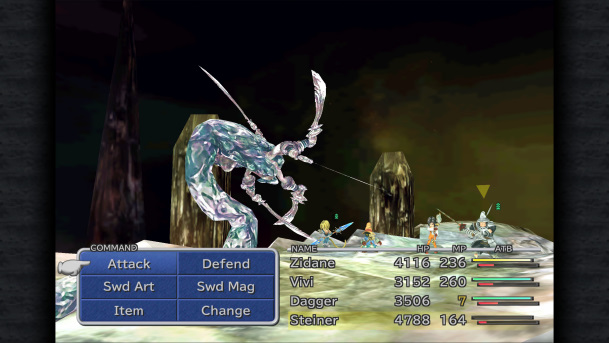
However, Final Fantasy has never been static when it comes to their gameplay systems and this is just as true even with games using the signature ATB system. Taking Final Fantasy VII-IX as examples again, the way characters develop their skills changes completely from game to game. Final Fantasy VII made use of a Materia system which allowed characters to gain, use and master abilities at the cost of positive or negative stats. VIII featured the Junction system where characters absorbed magic off of their opponents and then integrated them into a stat in order to increase it, making use of both the spell type and the quantity of them stocked up. IX used a system whereby abilities, both active and passive, were associated with pieces of equipment and characters could permanently learn those abilities by accruing points in battle. Within the course of this one system generation, we saw Final Fantasy continuing to experiment with their gameplay systems beyond the combat itself. This constant experimentation has, oddly, resulted in a franchise where experimentation is the only consistency when it comes to gameplay.
So what are my thoughts on what Final Fantasy is? Interestingly, I don’t find myself sitting with those who think story is the core of Final Fantasy’s identity nor do I find myself standing with those who prioritise gameplay. Instead, I’ve always viewed Final Fantasy as a series that manages to expertly blend the two to create unique experiences. When I think back to Final Fantasy IX or X, my two favourites in the series, I fondly remember the characters, their struggles and the adventure that they go through that challenges the very core of their identity and beliefs but I also remember the gameplay from the Chocobo Hot and Cold and how it beautifully blossoms into multiple quests and rewards or the complexity of the Sphere Grid which allows you to develop your characters in numerous different ways.
Of course, that isn’t necessarily a way to define the franchise either. I’ve seen other games handle this mix just as beautifully and they’re not Final Fantasy. In the end, I’ve come to the conclusion, sad as it may be, that Final Fantasy doesn’t really have an identity, at least not in the same way that most other franchises do. Instead, the franchise means different things to different people which makes it challenging to look at a game and say “That game isn’t a Final Fantasy game.” I personally do genuinely believe that Final Fantasy doesn’t feel the same as it used to but that is something that I cannot prove through objective fact, instead only providing my subjective opinion.
As Final Fantasy continues to change in the future, the commercial underperformance of XVI and, to a lesser degree, Final Fantasy VII Rebirth has thrown the franchise’s future into question but I think it’s very important that we realise that Final Fantasy’s identity isn’t as rigid as we might first assume.

Going by the online persona Immortallium, I'm a YouTuber as well as a Manga, Anime and Video Game enthusiast.
posted by Caitlyn C. Cooper on 25 Feb 2026
posted by Ross Liversidge on 17 Feb 2026

posted by Ross Liversidge on 13 Feb 2026
posted by Caitlyn C. Cooper on 02 Feb 2026
posted by Caitlyn C. Cooper on 31 Jan 2026

posted by Ross Liversidge on 30 Jan 2026
posted by Ross Liversidge on 27 Jan 2026