
Written by Jared T. Hooper on 06 Feb 2026
Distributor KIWIWALKS • Price £29.50
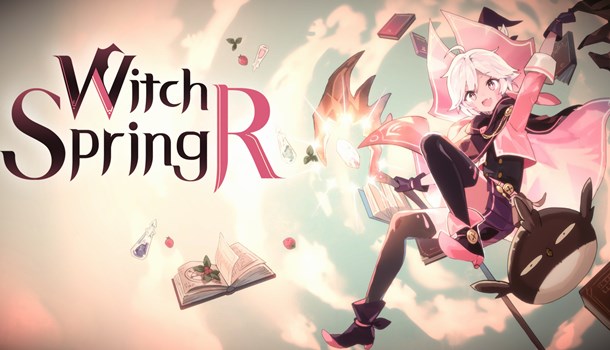
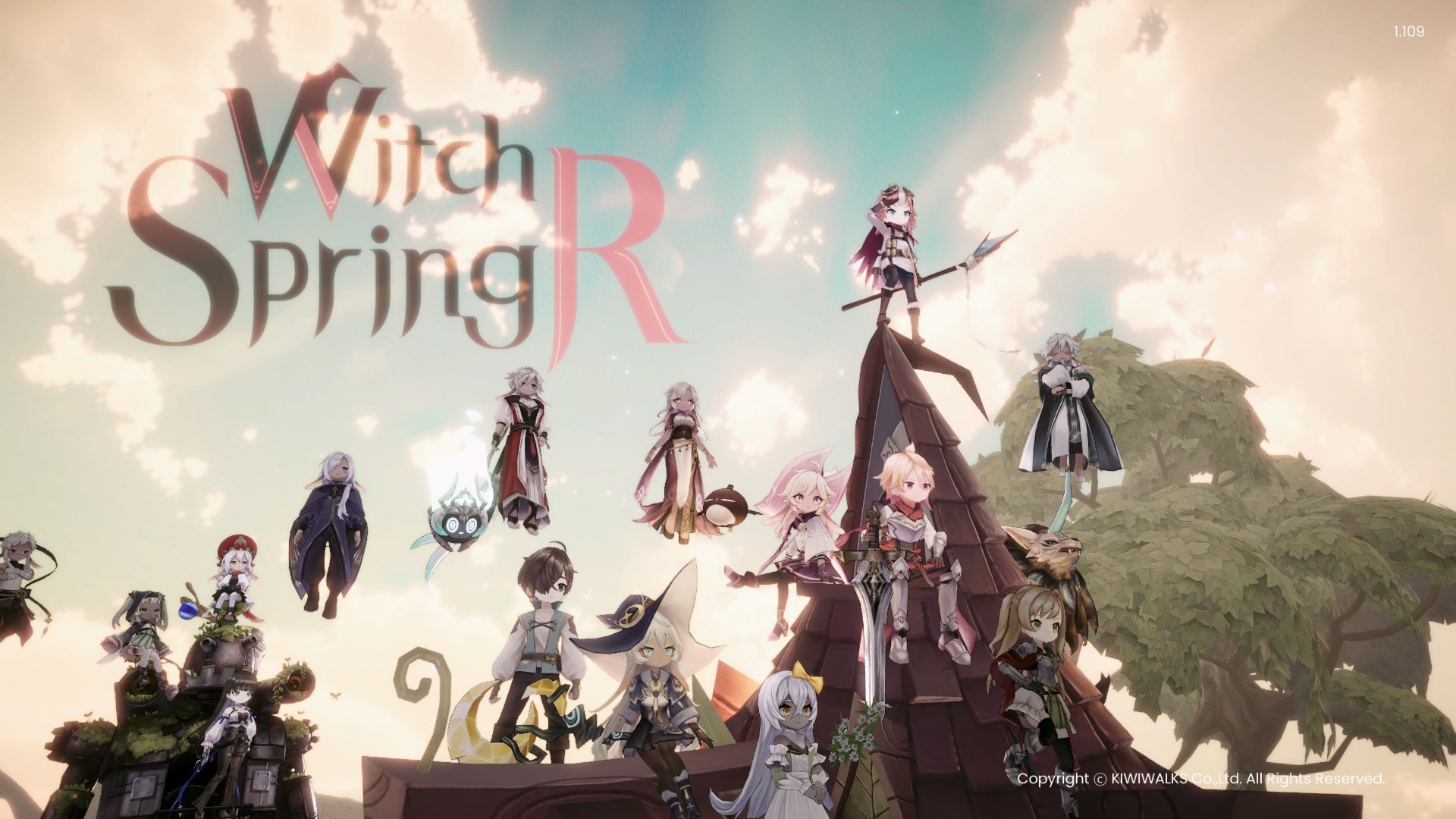
I had prefaced my review on WitchSpring3 Re:Fine with how it was a test run for if I might want to play WitchSpring R, and it passed with flying colors. WitchSpring 3 lit a fire that propelled me into WitchSpring R, though my landing in R was atop a carpet of damp leaves that stifled that fire some.
WitchSpring R has a much slower start than WitchSpring 3. While the latter has its protagonist, Eirudy, meet her love interest and learn of his plight to awaken his mother from a coma in the span of an hour, the protagonist of the former, Pieberry, starts off wanting nothing more than yoinking pies from soldiers. Three hours had gone by before I finally left Pieberry's home forest, and even then, her motivating factor was getting her mitts on tasty pie. Compared to Eirudy's emotionless girl, Pieberry is a genki girl, full of vim and vigor, and dashed with a little sass, and even though she was a more entertaining thespian to watch, I wasn't actually on board with an adventure whose end goal was a pasty.
New from WitchSpring 3, I had the option of selecting my difficulty. Since I had walked over just about every baddie in 3 with spiked boots, I deliberated playing WitchSpring R on Hard but opted for Normal, and I was glad I did because R starts off harder than 3 ever was. Pieberry's health doesn't restore between battles, and basic baddie attacks hit for quite a lot of damage. The Defend option I disregarded 99% of my 3 playthrough, paired with healing items, became my saving graces in R. Managing my health was such a priority that when I had the option of modifying my staff to specialize in physical attacks, magical attacks, or healing, I opted for healing without a second, third, or fourth thought.
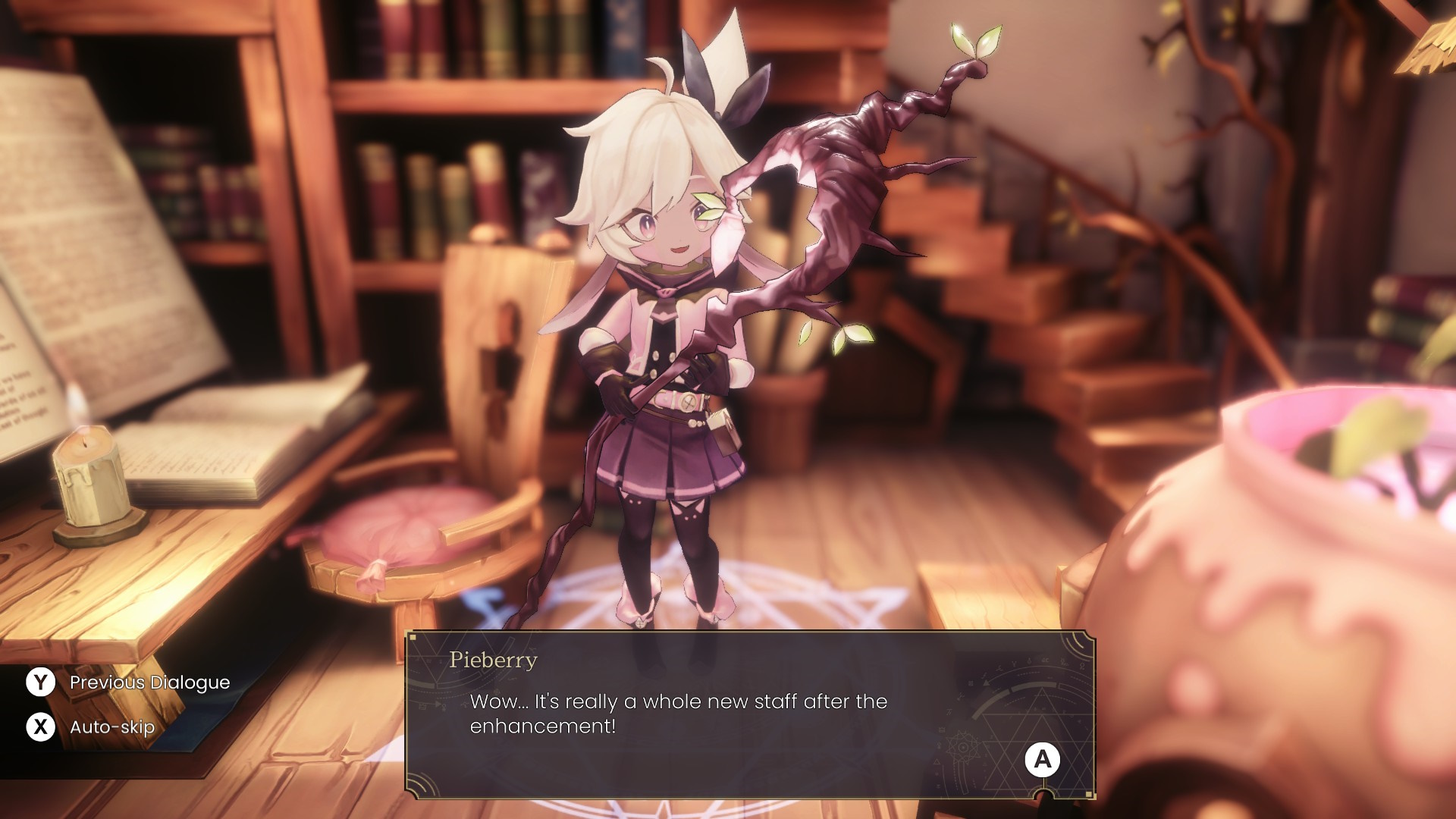
A feature new to R is modifying weapons so they get new special attacks and boosted stats, and it's easy to forget this feature exists, since it wasn't for another dozen or so hours that I got another weapon I could modify, which is another symptom of WitchSpring R's three-legged pacing. It isn't until the halfway point, thereabouts, that the game hits the stride WitchSpring 3 had going almost from the get-go. It isn't anywhere near as bad as something like Final Fantasy XIII, which likes withholding its mechanics until nearly a full day has been sacrificed for its playthrough, but R does suffer from a slow trickle of new equipment until you've cleared the arc in the first village.
I do have flowers I must give to R's pacing, and they're for its story integration. Pretty much everything the player—and Pieberry—learns has a story explanation. For example, the staff upgrades come about because a soldier breaks her old staff. It's not a flawlessly lain blanket the story hides tutorials with, but when I recall the first act, I remember the cutscenes and conversations associated with the tutorials over the tutorials' floating boxes with a .gif. Highly specialized mechanics do just receive a floating box with a .gif in lieu of a proper story explanation, but given how much time the story devotes to tutorials, it's better we're just given those flashcards before shuffling us along. 3 intertwined story with tutorials as well, but 3 was also much lighter on features and mechanics, so it could zoom through its tutorials, compared to R, which has a lot more terrain to map.
Since I lived by the sword in 3, I decided to take up the staff in R, yet although staves in 3 felt like an afterthought, swords and staves in R felt equally useful. The only reason swords would feel inferior was because I dumped the majority of my stats into Magic over Strength.
Much of R's combat is familiar to 3's, with the optimal strategy being to erupt a pillar of fire at the enemy's feet before bopping them on their noggin, yet combat is more fleshed out and better balanced. I was juggling between healing, setting up barriers, switching around weapons, so combat was so much more engaging, as well as livelier and better-feeling, with crisper particles, bassier SFX, and grander animations. Granted, I still love 3's combat, though I must confess that a portion of my brain would check out as I spammed the same one-two punch until the enemy keeled over. In R, my attention was always front and center.
R is also much more onboard with my goal of raising Pieberry into a little one-shotting murder machine. 3 encourages it, but I felt like I had hit a ceiling by the end, whereas in R, I felt that I could've kept chasing swifter victories. To compare, in 3, a boss with 40,000 HP, would, by the end of my run, take two or so turns to defeat with assists from my summons. In R, a bonk on the noggin of a boss with 50,000 HP would put it to sleep.
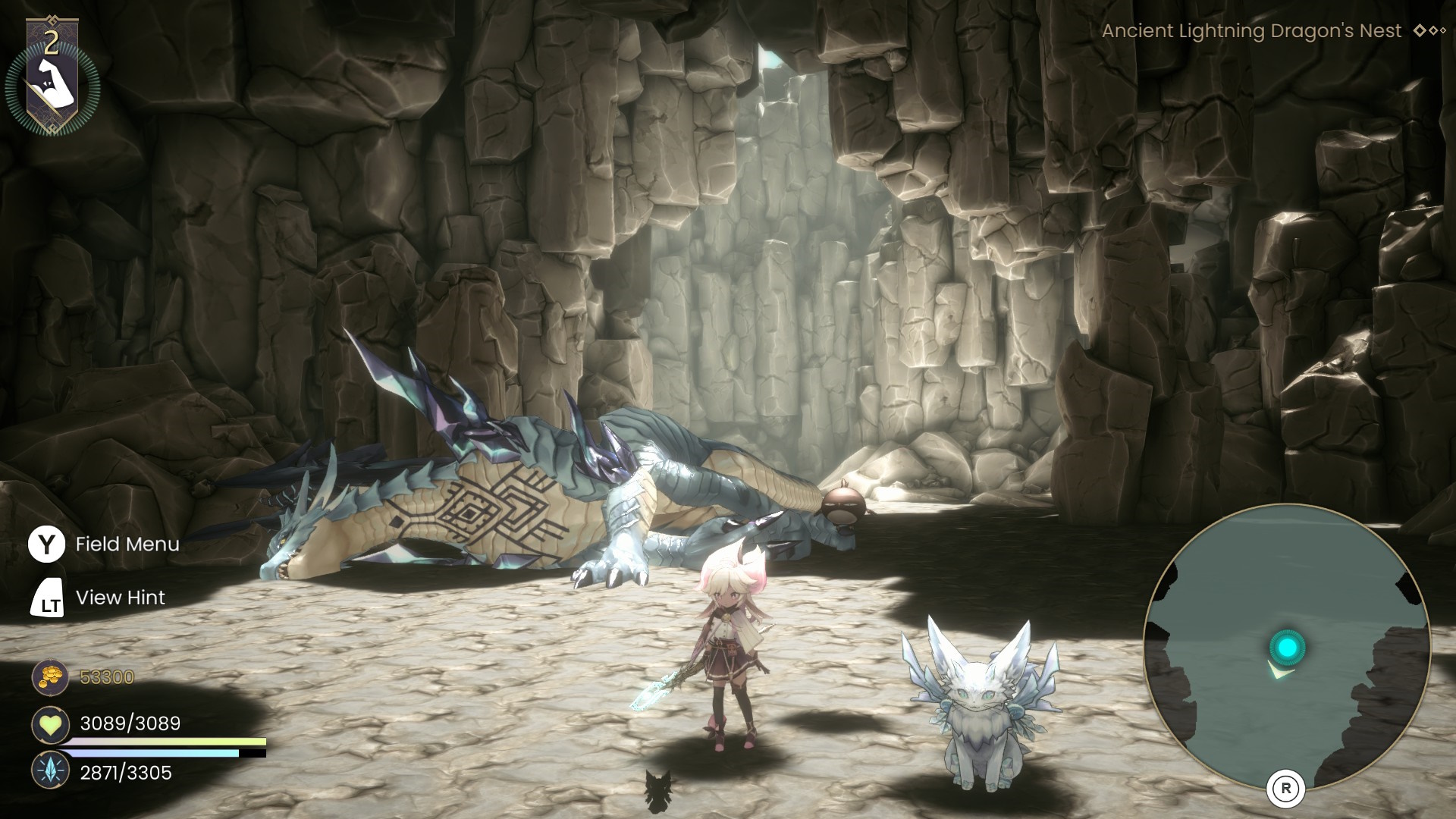
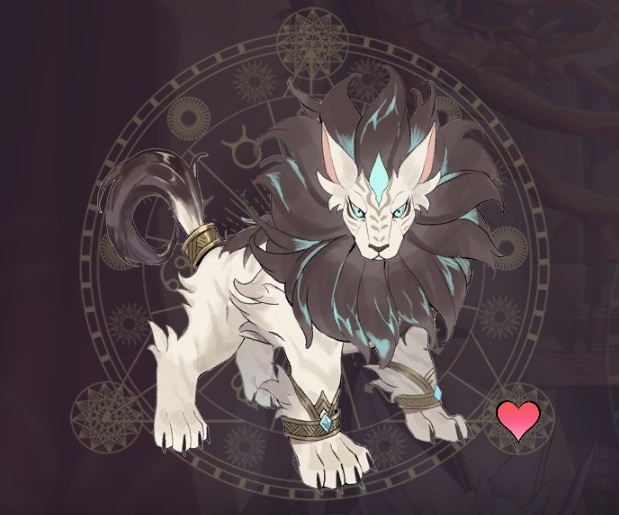
Summons make a return as pets, which have to be captured in the wild like a Pokémon, but whereas Pokémon are literally everywhere, potential pets are stationed at select locations, and the gap between pets to catch can be pretty wide. By the ten-hour mark, I only had four pets, one of which was just a bigger version of another. It left me longing for Eirudy's dolls, which could be awakened at any point so long as you had the necessary experience, but once I reached the halfway mark in R, the pets started pouring in, to where I could host an adoption event. I also must add that I love the designs of a lot of these pets. I liked the designs of Eirudy's dolls, and Pieberry's pets are even better, with more characteristics or creative concepts. My favorite pet design was this cat-like icy dragon that galloped on the air as it flew, though the competition for that slot is tough on all fronts, not just the pet designs.
Great designs are everywhere, from the characters you meet, to the baddies you fight, to the weapons you wield, to even the clothes Pieberry wears. Pretty much every time a new character debuted, I captured a screenshot because I liked their attire so much, and every time I came across new architecture, there I was, snapping pics like some obnoxious tourist. The list of designs I love is long and detailed, filled with items like the gable roofs that serve as doorways in the first village, a witch whose house's rooftop is fitted with a giant moon, and Pieberry's cat-themed socks.
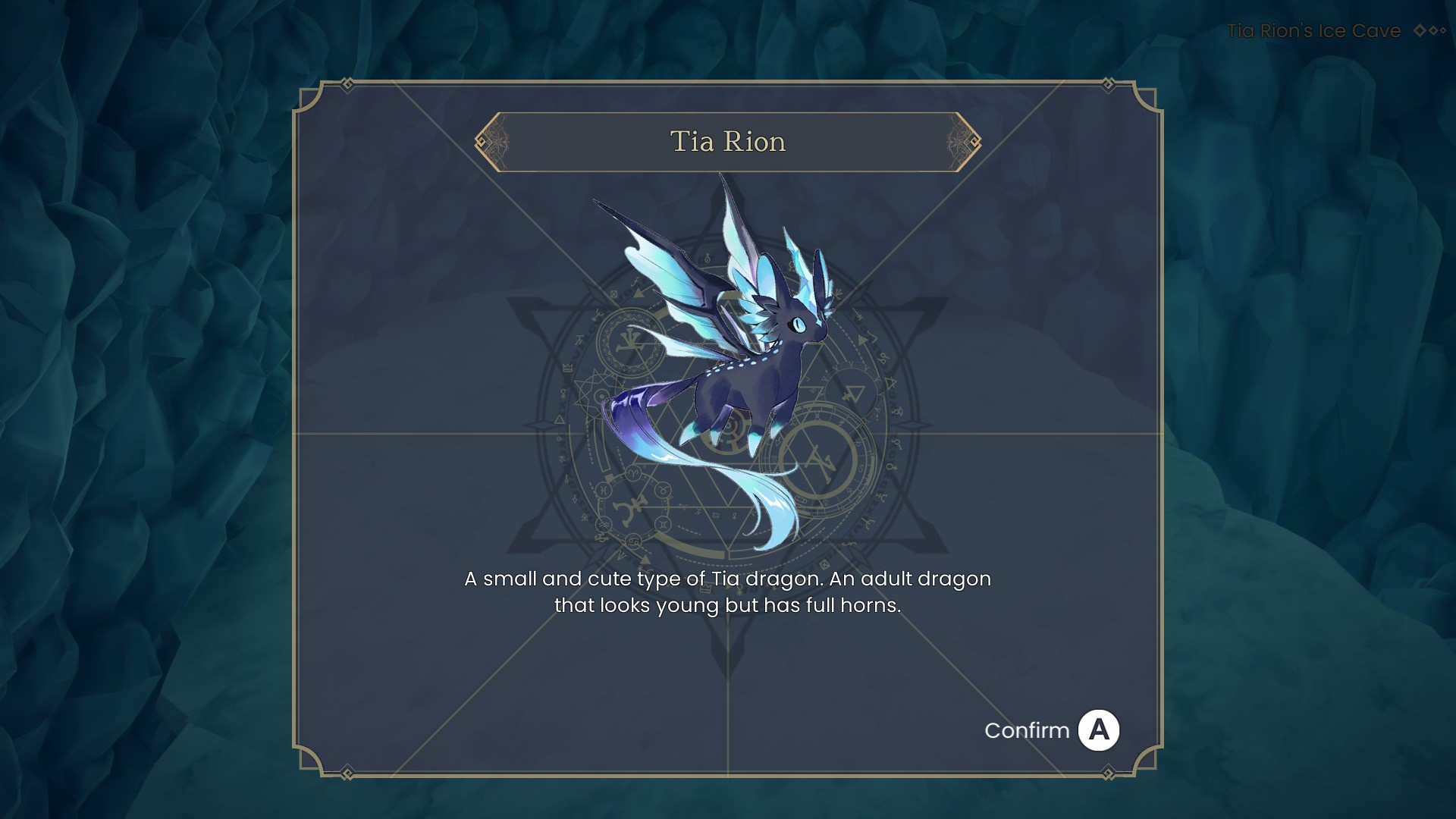
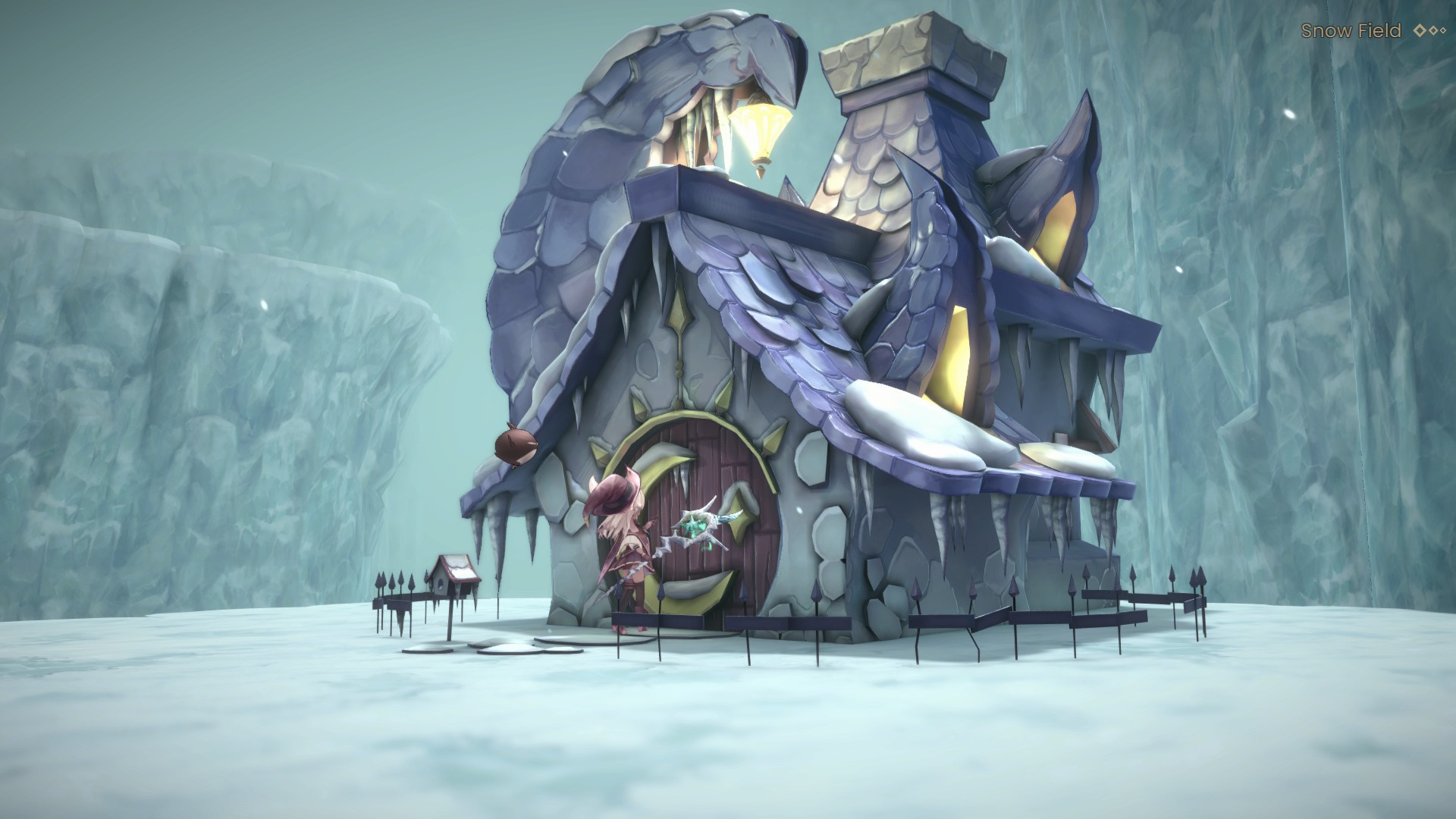
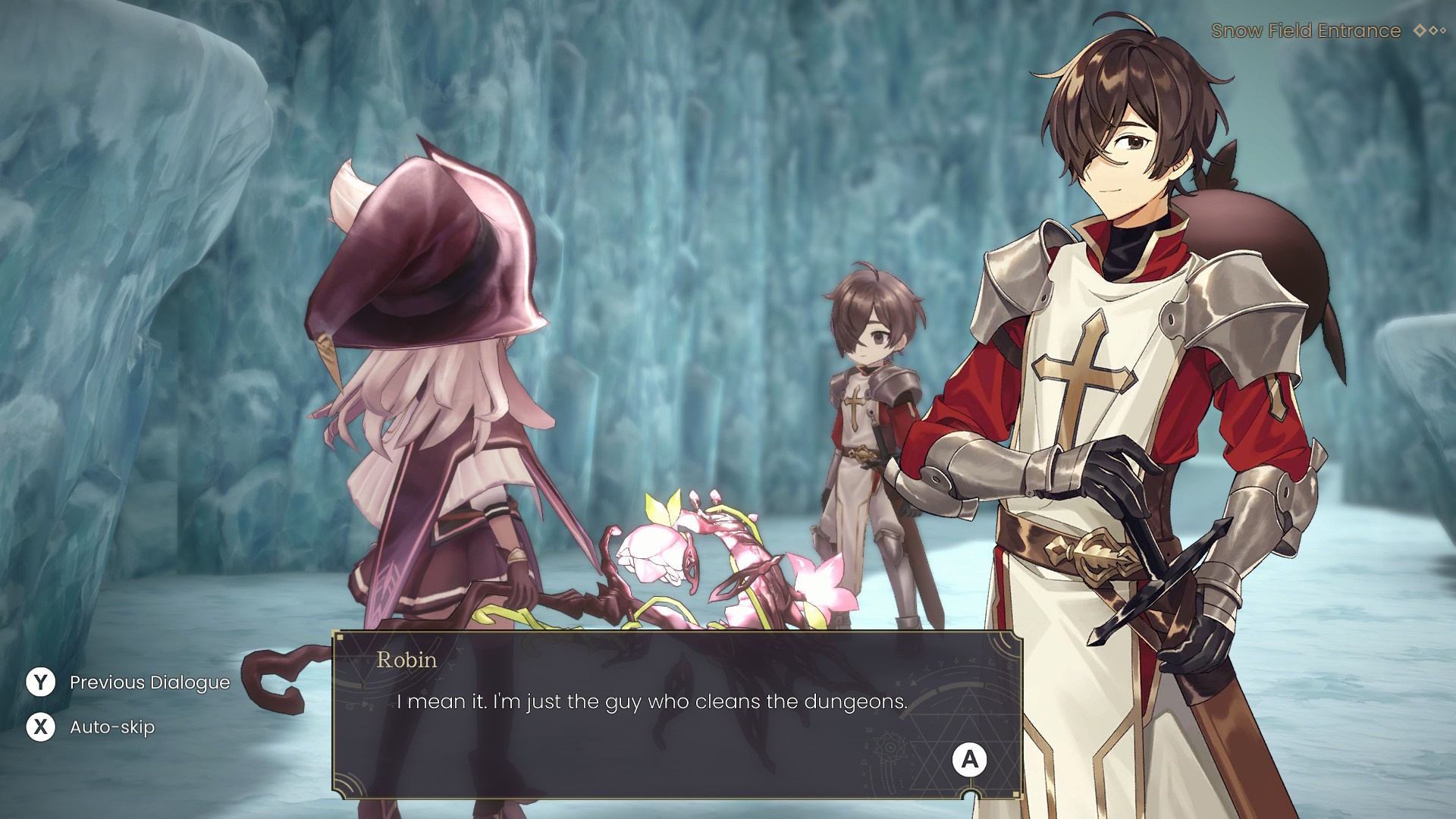
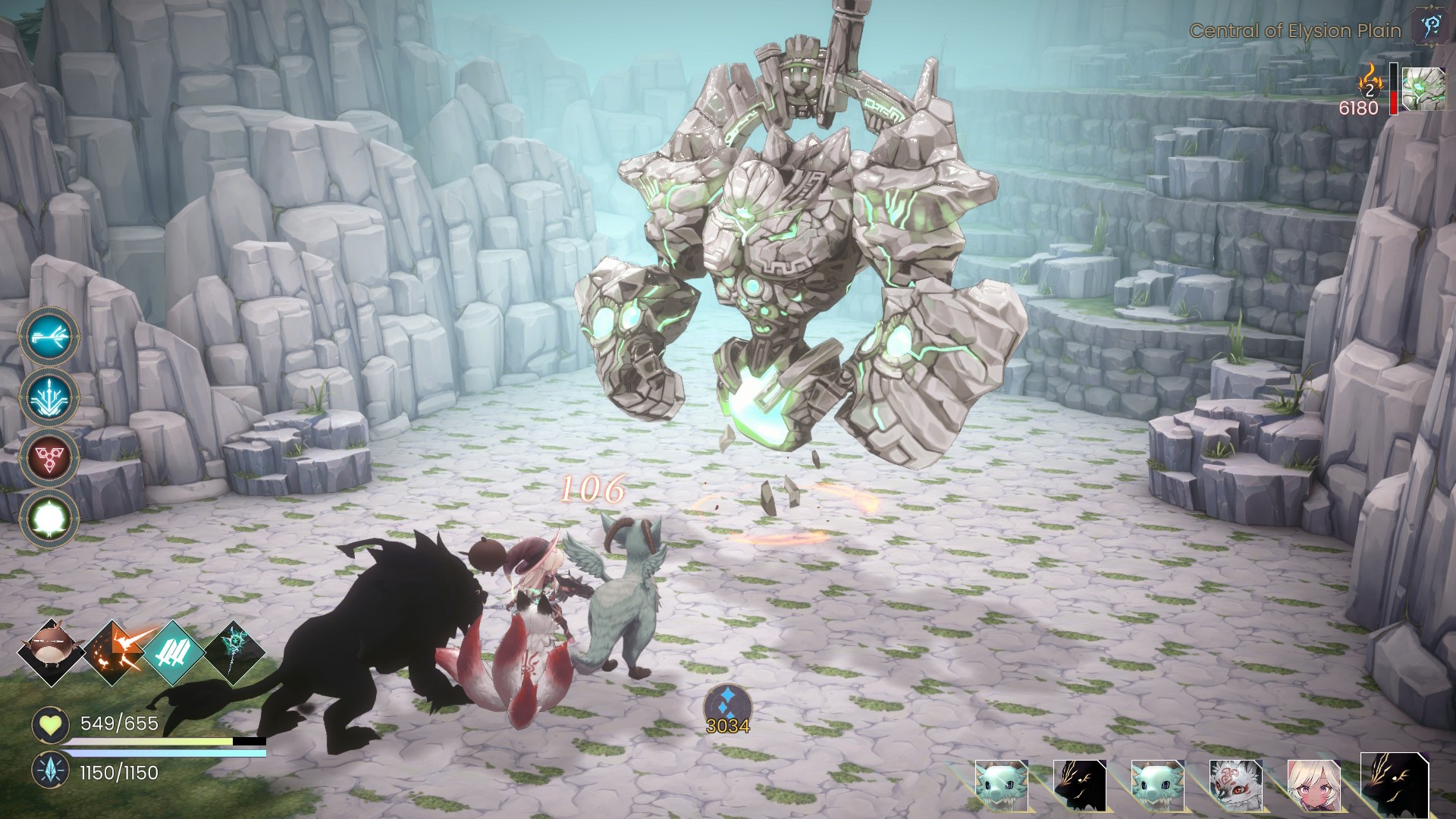
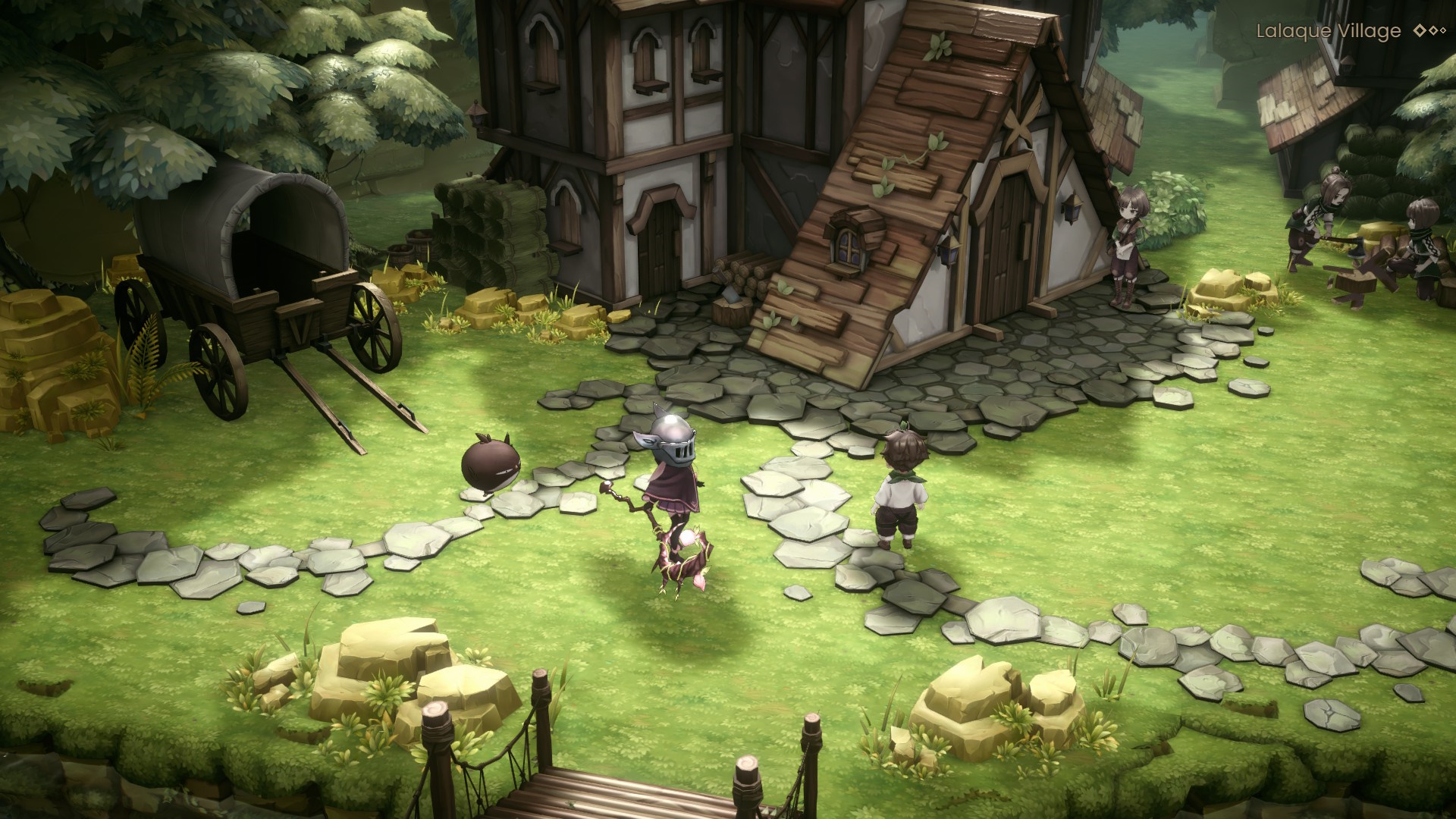
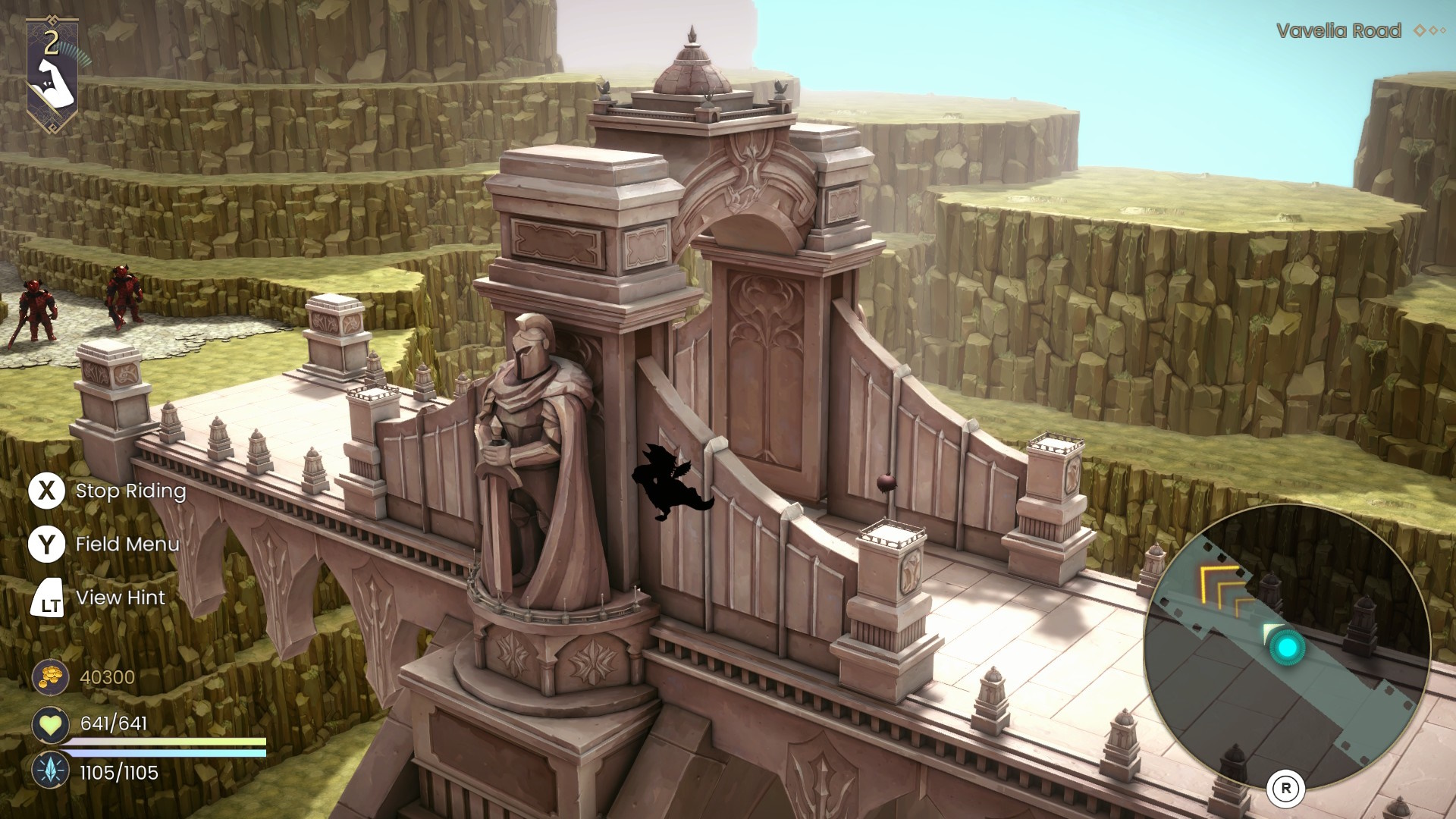
Conceited as this'll sound, I think the explanation for why I gel with so many of these designs is because they're what I would've made. There're certain features I'm not big on, like the droopy rabbit ears unique to witches, but by and far, if I had been tasked with designing this game's world and everything in it, many of these designs are or are close to what I would've landed on.
It's kind of incredible how fantastic the designs are since a few of the story-important pets had wildly different designs in the original WitchSpring on mobile. One such pet is a proud white lion that discharges lightning bolts from a jagged horn protruding from its forehead. In the original mobile version, it was just a giant boar.
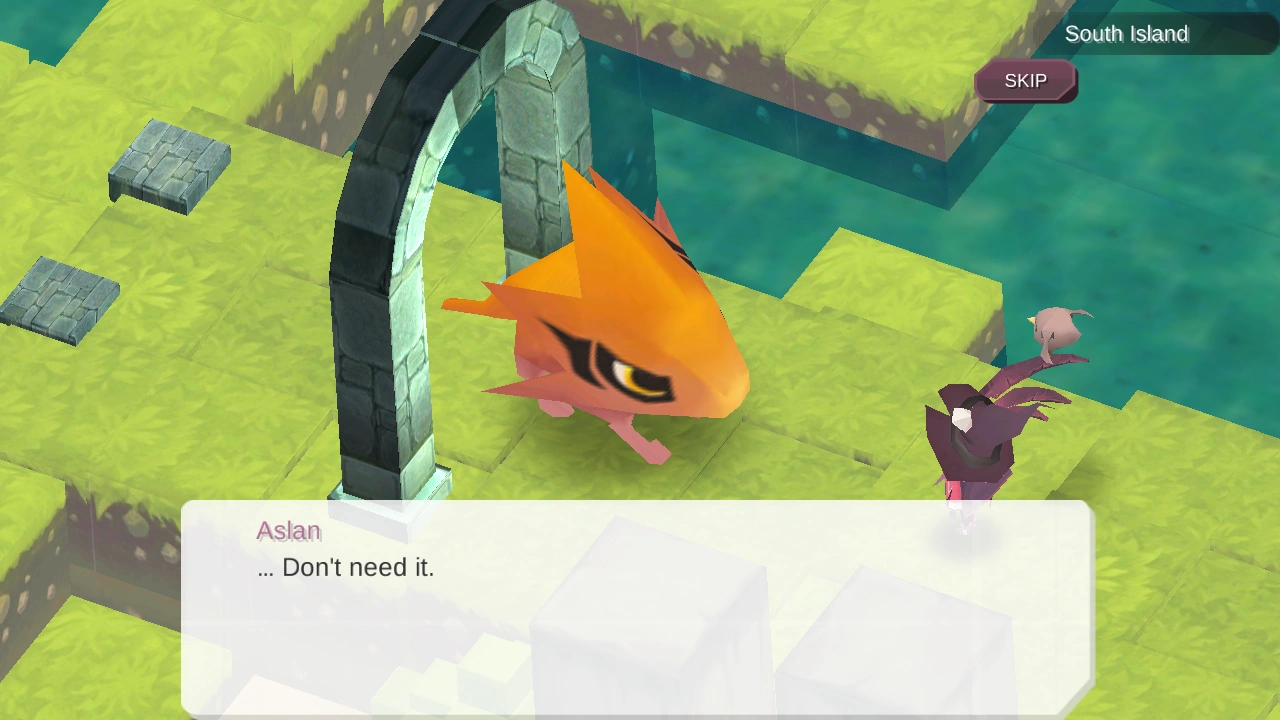
WitchSpring Mobile Screenshot from the Witch Spring Wiki
But while her pets are great to look at all the time, they're not great to use all the time. Where most of Eirudy's dolls are useful an entire playthrough, many of Pieberry's pets fall off once stronger pets enter the corral, which is a returning issue from 3's magic spells. I felt bad for the little boar buddy I had from the beginning, but by a certain point, I had pets that ran faster or hit harder, so there was no incentive to use him ever again. Funnily enough, because Pieberry's spells come in a plethora of targeting methods and ranges, certain older spells retain their usefulness.
Pieberry levels up the same way Eirudy does, by performing training sessions, but the entire training procedure has been overhauled. In both 3 and R, you accumulate training sessions by foraging herbs and rocks and terrorizing the local wildlife, but 3's sessions accumulate faster, and a single session allows for five exercises to be performed to boost specific stats. You select your exercises, you watch some quick animations, and then you're on your way. True to R's slower pacing, sessions accumulate slower, or at least it feels that way, because a single session restrains you to a single exercise. So to get the same wide-spread boost 3 gives from a single session, you have to hoard five sessions in R like you're saving up for a beach trip. To make up for the slower accumulation, Pieberry's stats increase by a baseline additive figure, averaging around +7, compared to Eirudy's percentage that, in the beginning, at most nets you +3 on a particular stat. In addition, R rewards bonus stats won by doing well in mini-games, and I'm italicizing the end of this clause to emphasize my stance that these mini-games are the bane of my existence.
3 has stairs. R has mini-games. The five-exercise regimen you load up is also a roulette wheel whose spin determines what mini-game you play. You can skip these mini-games if you want, but you lose out on the bonuses, so I opted in every time. The mini-games are real simple: mashing the face buttons, jumping over rocks, playing the world's slowest rendition of Guitar Hero, etc. Beating these mini-games is pretty simple. What gets my goat is the extra bonus you get for playing these mini-games perfectly.
Allow me to explain the kind of man I am. Some men like big boobs. Some men like big butts. Me, I like big numbers. Ever since Xenoblade Chronicles 2 turned me on to big numbers, I've been huffing a power fantasy high where I can slay bosses with two swats of a flyswatter. It's why I spent 70% of my WitchSpring 3 playthrough min-maxing my stats. So it stands to reason that when WitchSpring R presented me with the opportunity to make my big numbers even bigger, I enthusiastically jumped onto that bandwagon. But the perfect bonuses these mini-games demanded of me has me analyzing if my fondness for big numbers is an addiction I should see a shrink for.
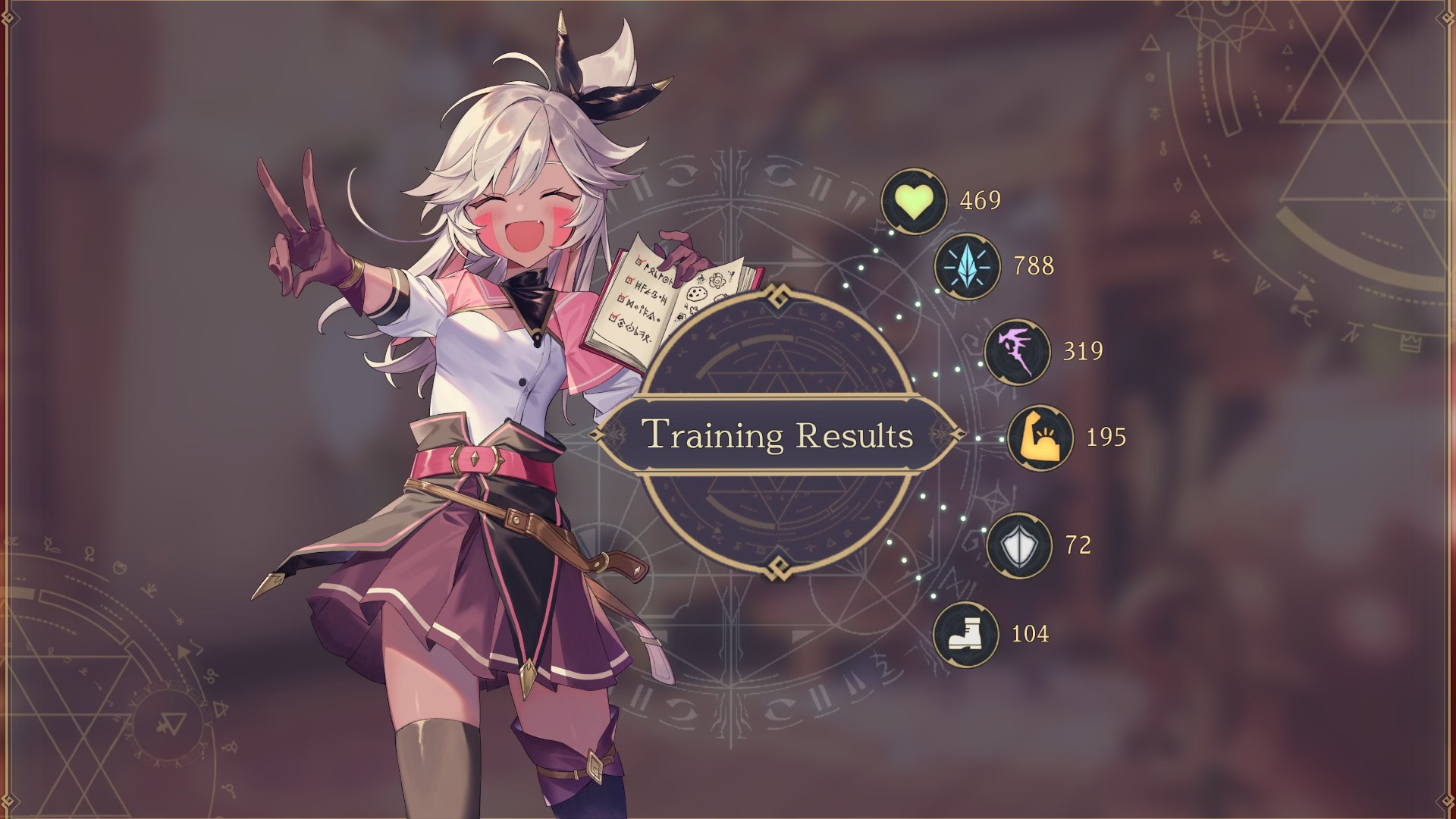
To be even-handed, some of the mini-games were easy to perfect, like the high striker. However, because I emphasized my magic power and MP, I did the mini-games that upped those particular stats the most, meaning I played those mini-games the most, meaning the difficulty increased with my successes, meaning the number of mistakes I made increased, meaning I would lose out on my perfect bonus often. If you're the type of player who doesn't care that their Golem has a Mild nature or you make your characters well-rounded, these mini-games won't bother you, but for me, save-scumming until no rabbit, frog, or sentient flower pot slipped past me in the tower defense mini-game that supplied the biggest boost to my Magic was my own personal circle in hell.
Everything in R is bigger, prettier, and more involved over 3 and especially over its original mobile version, which, gleaning from a handful of screenshots, has every marking of a dev team's first project, so it's no wonder the more experienced and ambitious team would insert mini-games into the training regimens. On that note, 3's training regimens were simple and efficient, pretty much flawless, so it feels like R tried reinventing the wheel by replacing it with a dodecagon.
My very first point of criticism for 3 was its grotty English script, yet I'm almost a score of paragraphs deep into my review of R and am only now bringing up the translation, which means just one thing: it's good. Like, strikingly good. It reads almost like a native English speaker had the pen this round, with lines altered for text more appropriate to the English language over what the Japanese voice actors were saying. Almost is the qualifier there, as, though the translation is largely really good, there are the occasional instances where the grammar is just incorrect or there might've been a more appropriate term for certain words here and there. Plus characters are in the bad habit of referring to proper nouns by attaching the before them, even if it's grammatically incorrect.
A sharper English script should make for a more enjoyable story and characters, and that most certainly is the case. The weak translation of 3 restrained how much personality each character could express in their speech, and that limit's removed in R, making each character more distinct, expressive, and charming. This goes nonuple for Pieberry herself, who wouldn't be half the character she is if she were shackled with 3's translation. Like what Project Kat pulls for Kat, so many sides of Pieberry's personality are on full display, from her bottomless glee, to her devil-may-care attitude, to her penchant for telling it like it is, and what it is is how ugly or stupid others are. A favorite moment of mine is when she spares a warrior's life not out of any moral or ethical foundation, but because she likes his face.
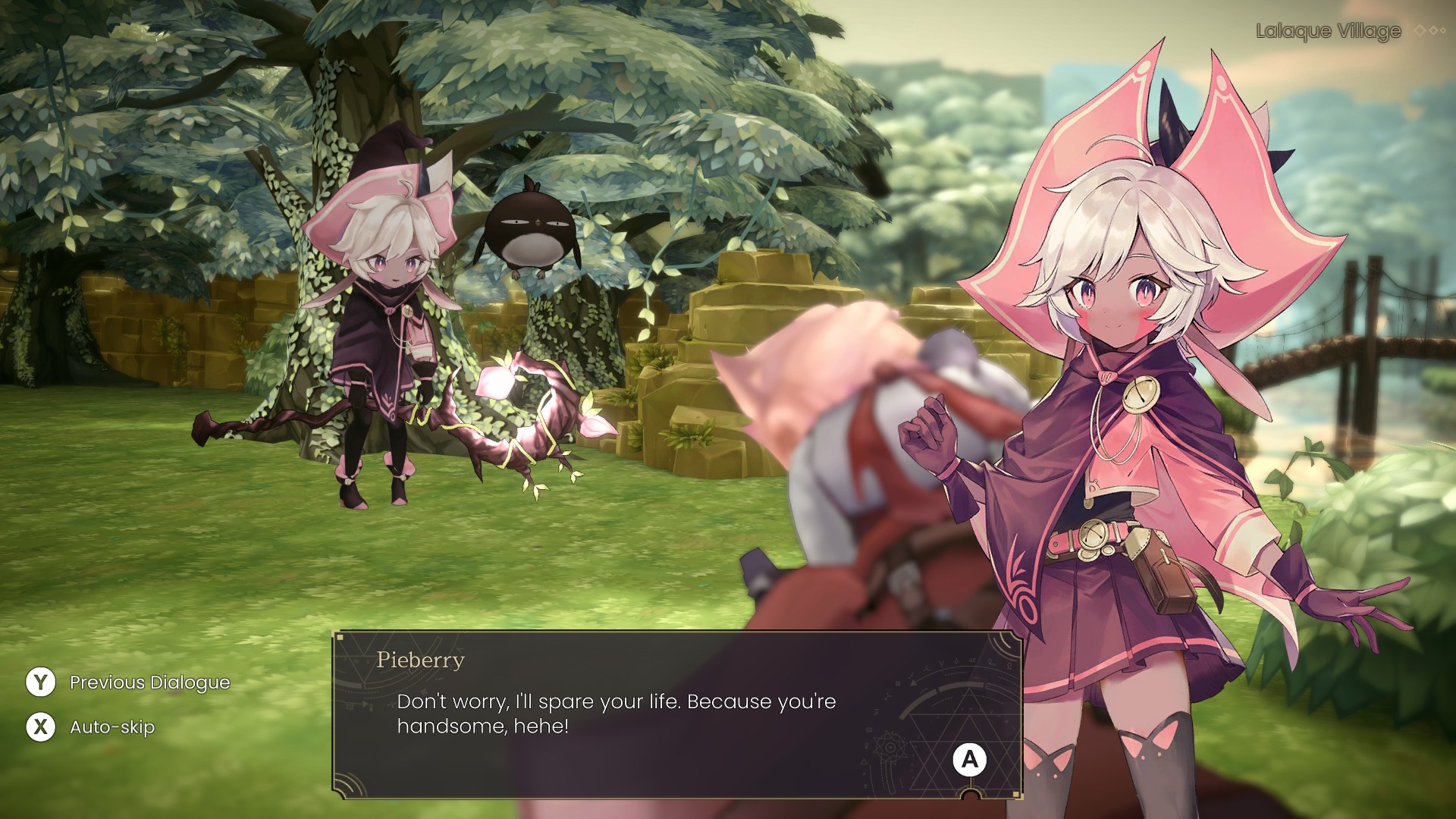
Although earlier I attached to Pieberry the label of genki girl, a trope that tends to conflate gusto with simple-mindedness, Pieberry is not a stupid girl. Fairly early into the story, Pieberry's on a search for her mother, and all evidence points toward one specific individual. But even though I had connected the dots, I thought it'd be a while yet before Pieberry would because she needed more evidence or was waiting on the right story moment, and then two seconds later, she turned around and proclaimed in no uncertain terms the same conclusion I had drawn. I wouldn't call Pieberry intelligent, but she's certainly smart, acting on those brain cells in ways that make other anime characters seem self-lobotomized.
All too common in anime and such are good guys who'll stand and watch as the big bad pushes the big red button to activate their world-ending death ray. Recently, I saw such a scene in Cold Steel 2. One of my party members had a gun, but apparently, it was only for show because they just stood there, doing nothing but chastising the villain for being evil. Meanwhile, I'm that guy from the opening scene of Jurassic Park shouting, “Shoot her!” If my party member had taken a shot and the villain swatted away the bullet or dodged it, I could've forgiven them. It's the lack of effort that got my dander up. If Pieberry were in that scene, she would've laid down sticks and twigs around the villain's feet and struck a match.
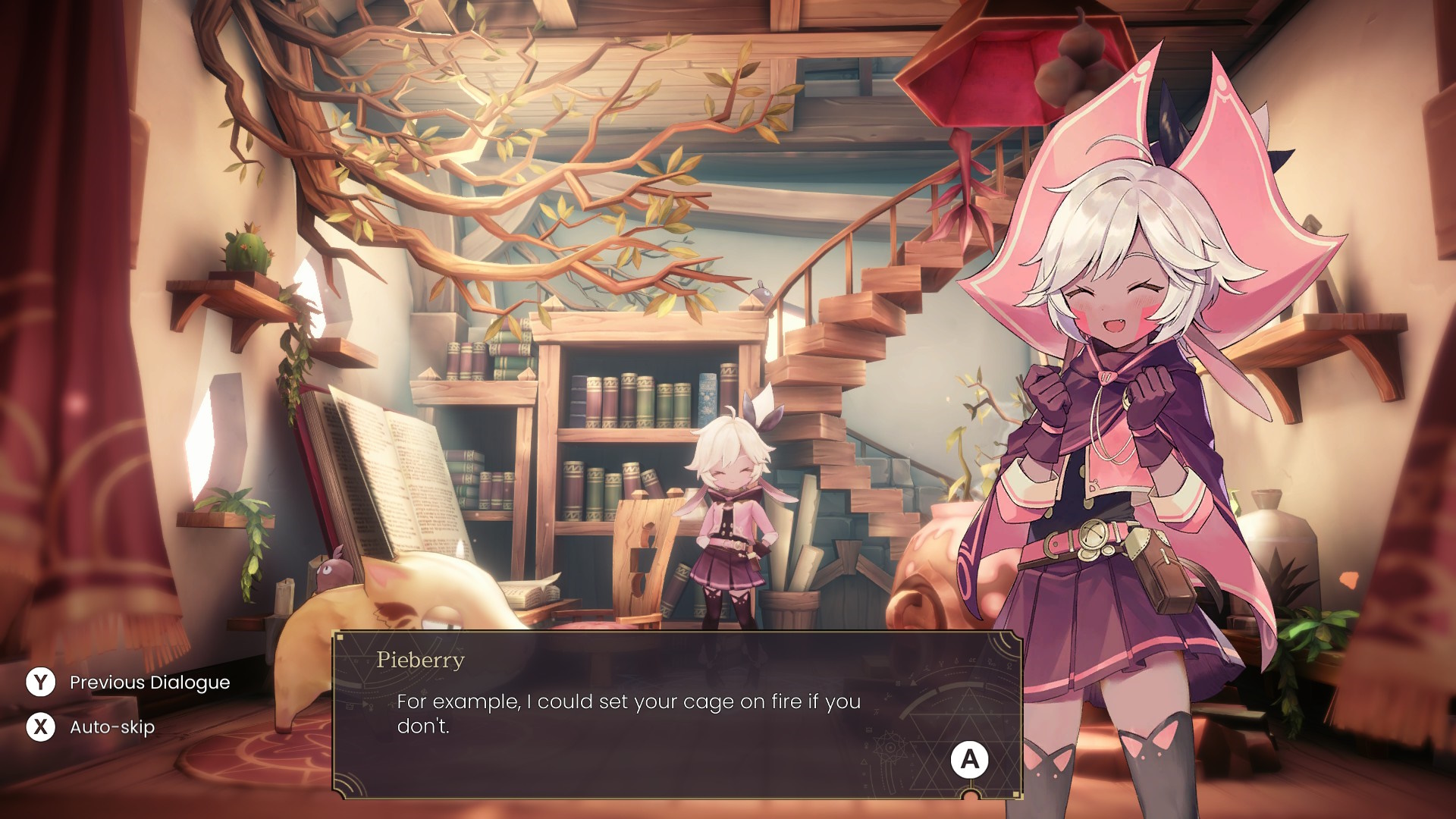
Every great protagonist deserves a great sidekick, and Pieberry's comes in the form of a rotund bird of questionable attractiveness by the name of Black Joe. He's the straight man to Pieberry's Silly Billy, trying to make sense of the nonsense and bad manners that spew out her mouth. If he had a proper pair of hands, he'd spend a third of the story yanking out his feathers having to put up with Pieberry's habit of sticking her nose where it doesn't belong, which is every dangerous place on the continent. He's a cynic with a schadenfreude that almost acts as an extension of Pieberry's willingness to strike first or extort others for her own playful gain. The banter between the two of them is so good that it's almost like watching a Tales skit.
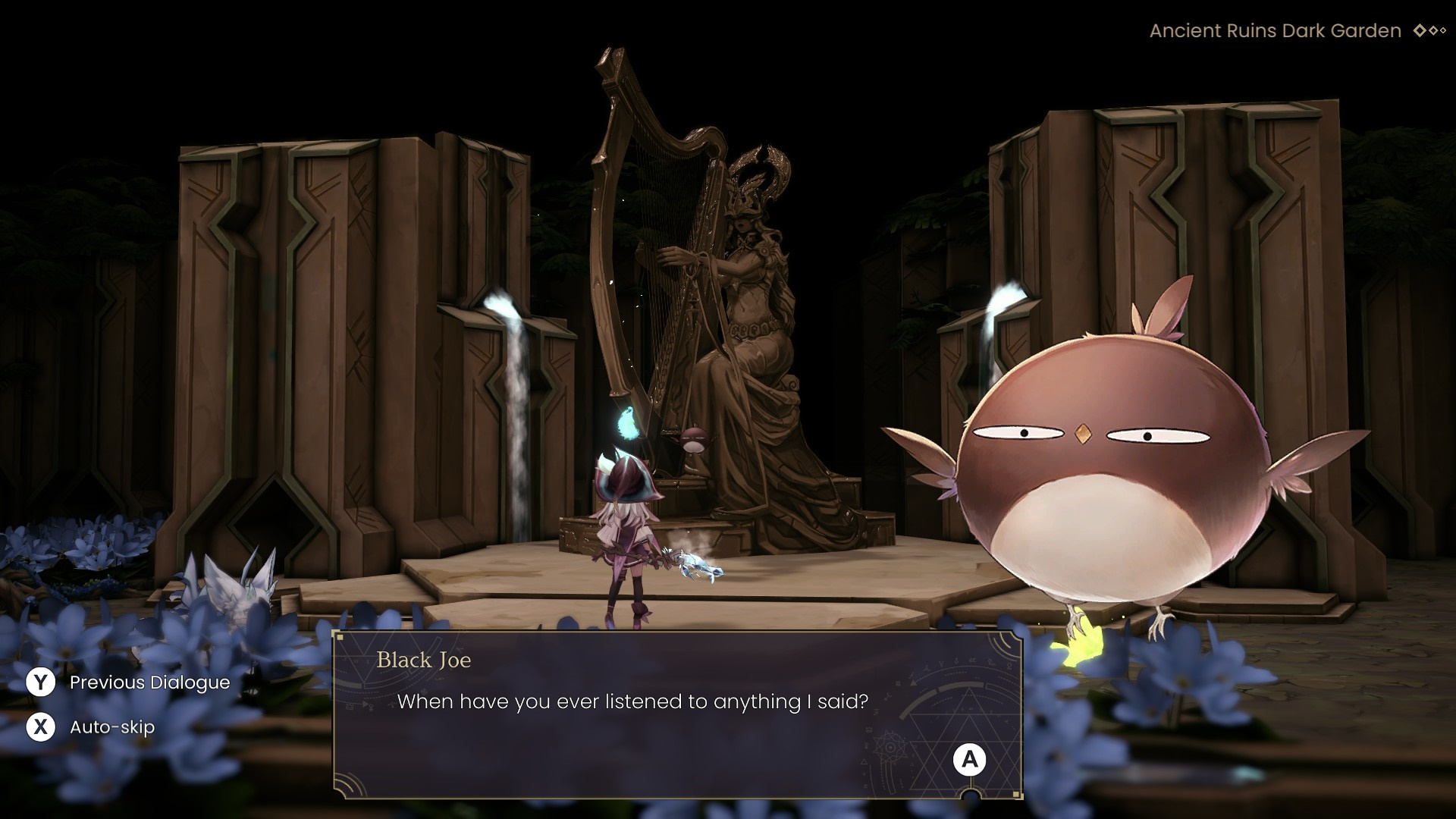
While the first thing that bugged me in 3 was the translation, the first thing that bugged me in R was the mini-map. 3 has a mini-map, too, but it has to be toggled on, but there's no reason to do so because a.) areas are small and easy to navigate, b.) the map chews up a sizable portion of the screen, and c.) it looks like a poorly cropped image in Photoshop. R's mini-map is more readable and doesn't occupy too much screen real estate, but there's no way to toggle it off. Not long before, while playing the Cold Steel titles, I felt like I had relied on their maps too much to get around, and I was thankful 3 allowed me to properly learn and understand the lay of the land simply by exploring. The only map I needed was in my head. However, R is insistent that I take a map, so I spent much of my playthrough actively holding my eyeballs away from the bottom-right corner of the screen. Same as 3, areas are small and easy to navigate, so there wasn't a need to resort to the mini-map. It did come in handy when revealing secret paths obscured by rocks, but if they're plainly visible on the mini-map, they're not much of a secret, are they? Still, it did save me the trouble of having to look any of those secrets up. Walkthroughs and other hints on R are scant or shoddy, so it was sometimes tricky looking up how to complete a sidequest or find goodies I missed. I still wish the mini-map could be toggled on and off. Then with the mini-map off, I could make certain my full attention was on the living, breathing environment and not a bunch of geometry. Also, I could've done without the giant yellow bouncing arrows on the mini-map shouting at me where to go. The level design did a good enough job of navigating me already.
The maps in Fantasian are dioramas hand-built, photographed, and imported into the game as background images, and the maps of WitchSpring R gave me this similar feeling that I was exploring clay dioramas, with bold, painterly textures and many cliff edges that fell away into a fog. It sort of gave the impression that I wasn't exploring the world as it is, but a storyteller's recreation that captures the key locations and leaves the other minutia to the imagination.
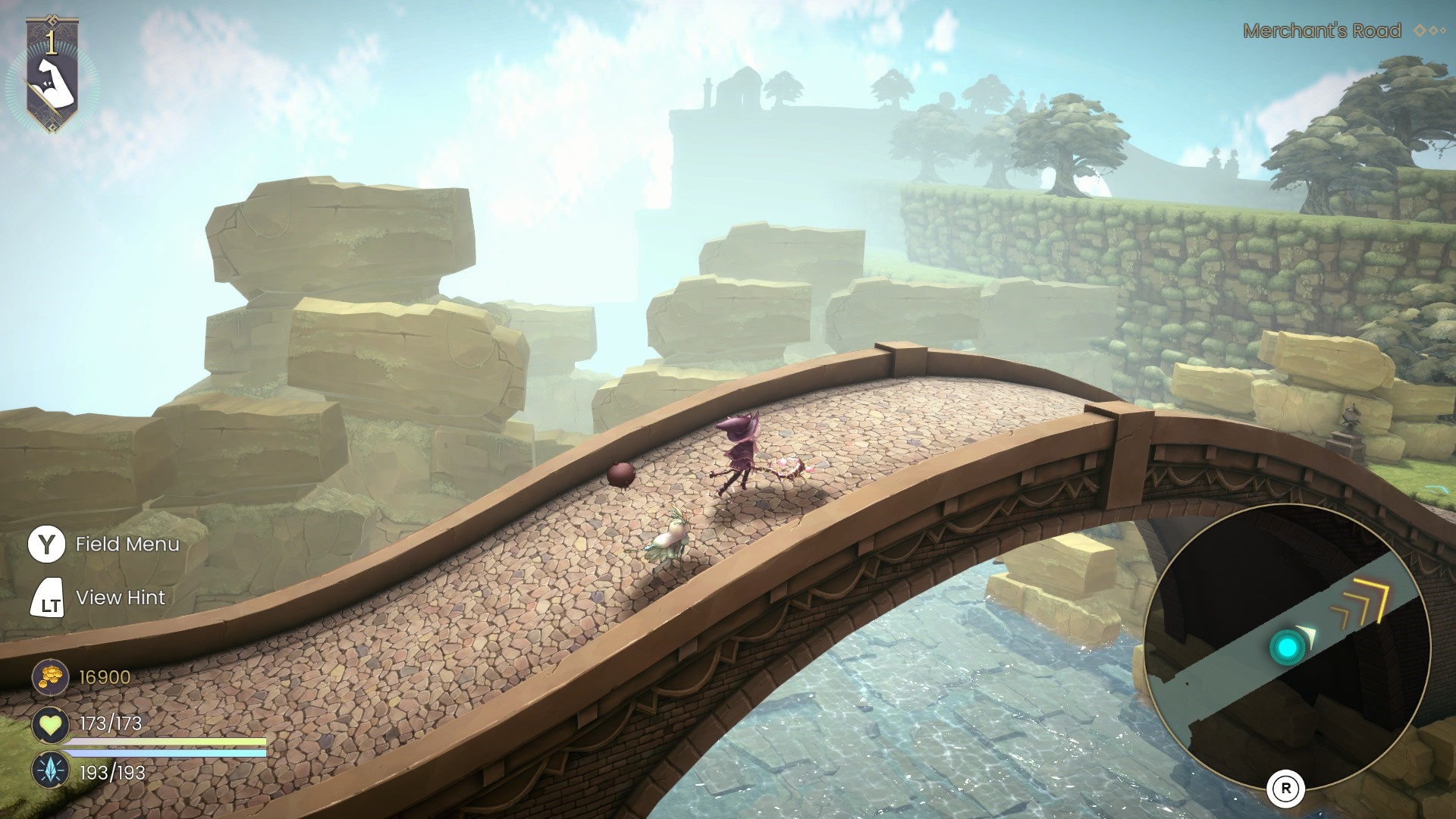
Going off memory, I would've said the world is bright and colorful, but scrolling through my album of screenshots, a slight sepia filter is layered over, adding to that storybook feeling, that we're witnessing events that transpired centuries ago but were restored to HD color for a modern audience.
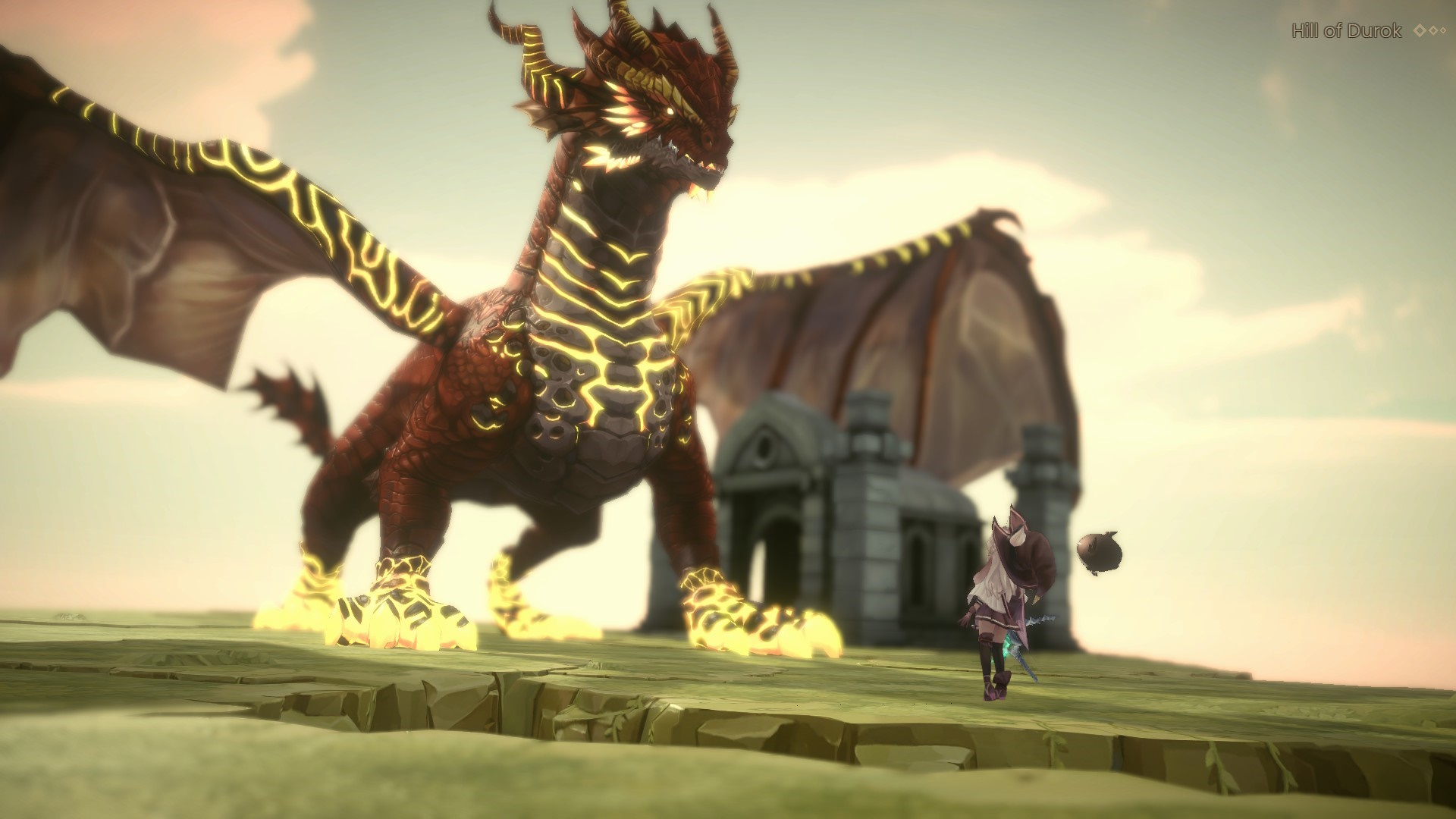
With this grander, more detailed world comes freedom for the camera. Not in gameplay, as the camera is locked in place when exploring, but for cutscenes, where the camera has free reign. The camera in WitchSpring 3 remained static at the same angle and position almost the entire game, only zooming out or rotating at specific instances, usually to showcase the scale of its largest dragons, and because of this, the story's presentation was pretty matter-of-fact, with events witnessed as they are, no flourishes added with the camera by, say, panning in when a character says something dramatic. WitchSpring R for its cutscenes does away with this limitation, allowing us to see expressions of shock or anger, to frame someone standing before a grave, or to unsettle by creeping about the edges of a church facade. These many expressions of the camera imbue the story with emotion and drama 3 wasn't able to achieve. For some reason, though, the gameplay location remains plastered in the top-righthand corner, even during dramatic cutscenes.
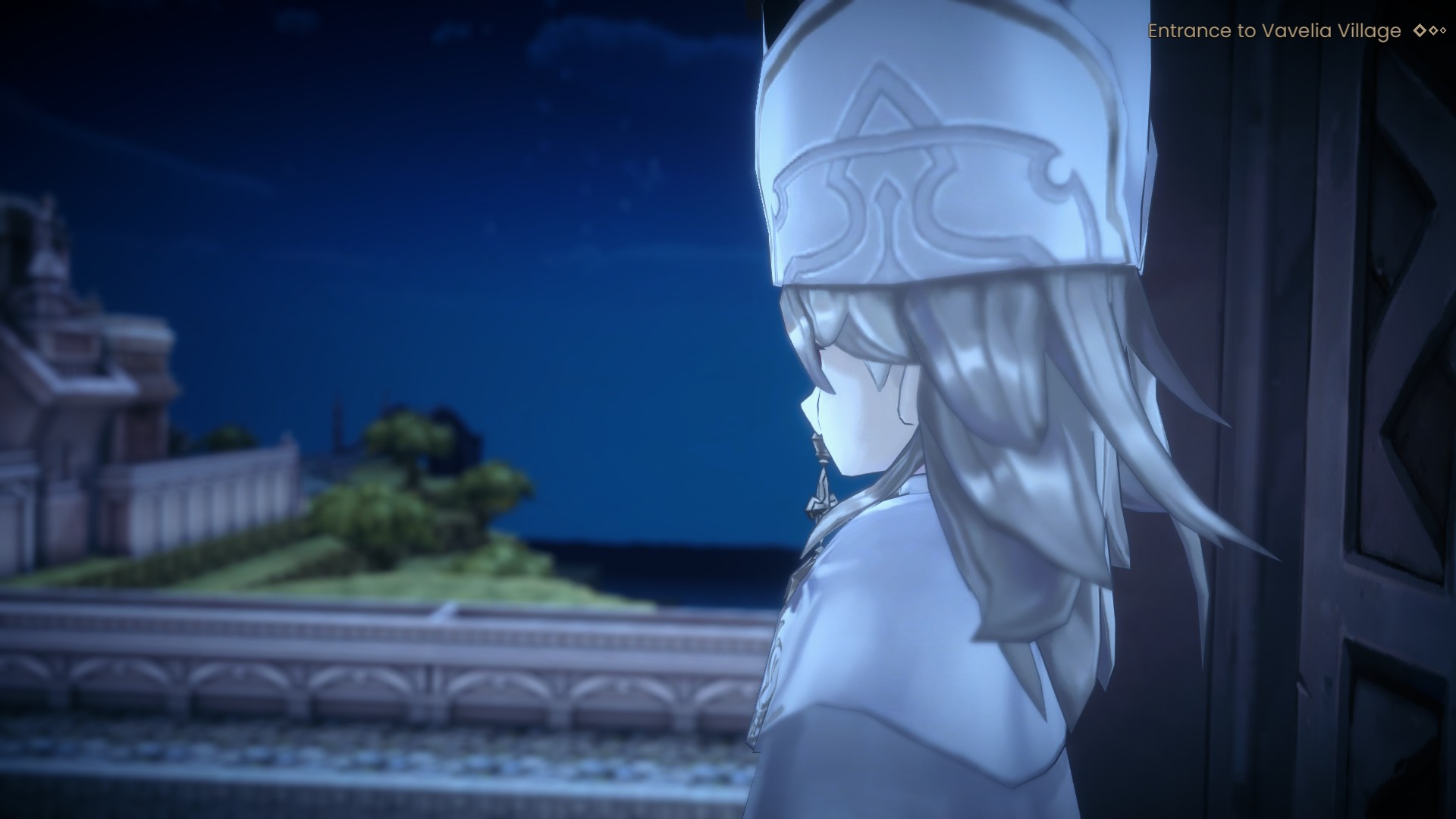
The world's warm palette and happy-go-lucky protag together with the initial hook of “girl wants pie” gave off a vibe that I was playing something in the vein of Story of Seasons, so it was quite the shock at how grand the story became. New characters are introduced constantly, allegiances change, the world's secrets are revealed, and the final boss has the power of God on his side or is God: it's your par-for-the-course JRPG story developments I stupidly didn't see coming simply because of the cutesy, humdrum first act. The way the story develops also reminds me of, strange as this'll sound, Red vs. Blue, specifically the Burnie Burns-led seasons, in that it'll introduce various plot and world elements that stand well on their own but have wider ramifications or greater revelations down the road. The epilogue chapter goes especially hard on this, putting questions to plot events I took for granted or had completely forgotten about, and it all comes together into a nicely stitched journey.
Well-written as the story is, I must admit that even during its dramatic or cinematic moments later on, it only engrossed me so much. It wasn't like Xenoblade Chronicles, 13 Sentinels: Aegis Rim, or Ghost Trick: Phantom Detective, where I just had to find out what happened next. With WitchSpring R, it felt more like I was observing a painting in a museum and admiring the brushing technique the artist had used, and I can't quite pin down the magic those former titles have that R lacks. It could be one thing, it could be multiple things. Each of the aforementioned titles have killer stories for different reasons. If I had to hazard a blind shot at a dartboard for some factor holding back WitchSpring R, the dart would land on the power level of the antagonists.
Pointed out in this video essay, a factor weakening the story of Xenoblade Chronicles 3 is how low the threat level of Moebius really is. Sure, their organization is responsible for the horrible state of the world, and they show up periodically to blockade the party, but as far as power levels go, the party almost always has the upper hand, sucking out the supposed danger Moebius pose, and it's sort of the same in WitchSpring R. The church has its holy army occupying every corner of the continent, but the common soldiers are cannon fodder Pieberry tramples over, and their commanding officers spend more time fighting each other and third parties than Pieberry herself. Compare this to the first Xenoblade, when an entire race of people is transformed into giant flying stingrays, or in Persona 5, when a girl is driven to such despair and hopelessness by the first arc's antagonist that she throws herself off the school rooftop. It's these sorts of consequences to letting the bad guys roam free that make them feel threatening, which in turns makes it harder to put a story down as the stakes ramp up. WitchSpring R is largely without these heavy moments, lacking the courage for any substantial consequences, short- or long-term. It's not like it doesn't try, but the straits don't seem too dire when Pieberry escapes certain doom only to go back because she forgot to return the pen she borrowed.
Even if the story didn't engross or engage me that much, I did still enjoy it and did see its engine revving by the time Pieberry switched her goal from finding pie to finding her mom, and it wasn't long after that the gameplay picked up. Finally, after complaining about R's slow pacing and then dragging my feet on that same point in this review, I at long last get to the parts of the game that are really good, when I got stuck in to the same gameplay loop that sucked me in in 3.

If you've read my review on 3, the gameplay loop is the same: go out for A, craft B, improve C, test out D, grind E, beat up F, and keep that going until it's three in the morning and you're panicking because you have to be up for work at six. It was by this point, at long last, when I could properly stockpile my arsenal with better spells, more pets, and a greater variety of weapons and thusly have more freedom and creativity in kitting out Pieberry.
Enemy drops aren't guaranteed now, but battles aren't 1v1s anymore, so it's not much more troublesome grinding items. The most major difference, as I've harped on enough, is that it was a while before I could fully sink into this gameplay loop, somewhere in the ballpark of 10-15 hours in my playthrough. But during this extensive excursion, it dawned on me that all along, I was, to some extent, able to go out hunting and crafting but didn't realize it due to a combination of early-game design and a feature seriously downgraded from 3.
WitchSpring 3 has a checklist of side goals that update each chapter and involve collecting or crafting specific materials, poaching wildlife, or even hiking in certain locations, and while I normally dislike checklists because they're typically just excuses to pad out runtimes with tedious chores, I liked 3's checklists for three reasons: they weren't long, they provided actually good rewards, and they set up the boundaries for what the player could accomplish. This last point is most pertinent as it relates to R, because without these neatly established boundaries, it was trickier to know when I could and couldn't fight a boss or craft a certain spell or item. R does still technically have these barriers, but there's far fewer of them, and what they request sometimes are just caches of items from areas I just finished exploring, making it trickier to know the full extent of when I could and couldn't fight a boss or craft a certain spell or item. Granted, these boundaries were more necessary in 3 because its world is more open from the outset than R's, so they helped cordon off what wasn't a good idea to tackle. But R could've used that same assist because there're a handful of areas with strong bosses where it's hard to gauge when's a good time to tackle them, since the game wants to be cute and hide their stats behind a bunch of question marks, or in the cases of hidden enemies, that they exist at all. Once or twice, R's side goals pointed me toward a secret area, but the rest asked for spoils from baddies only two steps off the required path.
This rings me back round to the design of R's optional content and how it's sometimes detrimental or misleading. Behind Pieberry's house is a fox den with a bunch of sentient fox statues that don't deal much damage but sap her MP, leaving physical attacks as the only manner of defeating them, making defeating the pack at this stage infeasible due to her pathetic Strength. So I opted to return at a later date, but there was never a measurement for when was a good chance to return. Maybe there was when I got a sword, but since I was dumping all my level-ups into Magic, I wasn't relying on any physical weapons. By the time I did return to the fox den, I could defeat the foxes in a snap, and the pet I captured here was replaced almost immediately by something else that did the same thing, just better. WitchSpring R isn't the first JRPG that has this same issue, and it won't be the last, I'm certain. Xenoblade Chronicles 3 is rife with it because there's so much extra content, it's borderline impossible to cover all of it without winding up overleveled for some. But when it comes to R, it has a series solution that nudges the player in the right direction but waters it down for no discernible benefit. Had I received that nudge, I could've made it back to the fox den sooner.

I suppose the replacement is the player's own curiosity and intuition, which I do respect, and to some degree, this does work out well. Pets level up with foods, but they only like specific foods. Most of the pet dragons are caught in a valley populated with these ugly birds that drop hunks of meat on defeat. Having devoted a chunk of my childhood watching Animal Planet and playing Zoo Tycoon and therefore having a firm understanding of the food chain, I surmised the pet dragons predated on the ugly birds, and my surmise was correct. (There's also a cutscene showing a dragon eating an ugly bird, but I'd forgotten about it at the time.) But then there're times when clues are more cryptic. Behind Pieberry's house is a big sleeping turtle that she remarks never wakes up, no matter how big of a boulder she smashes over its head. A good reach of the game, I pondered how I could wake it up—cymbals, gong, shot of espresso—but nothing ever fell into my inventory that was a definitive aha! Eventually, I gave up and looked up the solution, which, wouldn't you know it, I did have on me nearly my entire playthrough: an overripe berry, found in the first village. I was beside myself how I was supposed to make the connection that a turtle would wake up from a berry. To be fair to the game, it does hint that this is the solution with the item's description, which reads that the berry smells so bad, it could wake the dead. To be fair to me, this is the only time in the entire game where you need to read an item description to understand its edge-case usage. The game didn't train me to pay close attention to item flavor text because there's never a need to—except in this one precise instance. It's the exact opposite problem of Pokémon Red & Blue, which teach the player that they can find items hidden in trashcans despite the fact that the trashcan that teaches this mechanic is the only trashcan with a hidden item in the entire game.
Wide and broad, the game's upfront with where stuff can be found, and it does lend a hand in its own clever ways, like setting up a rhino sanctuary so Pieberry can poach their horns for the absurd number needed for a bunch of crafting recipes. But that hand sometimes isn't held out very far or is only there for a second before it's pulled back. I like checking online for missables and other secrets I might've floated past and don't mind cheating for things like Persona 5's pop quizes, but when I have to consult the internet because my pet cat won't eat fish or milk and learn instead that its favorite food is an ice golem's decaptitated head, it has me exclaiming, “How the flip was I supposed to figure that out?!”
Looking stuff up was pretty much a requirement for the side content in the epilogue. The same applied to 3's epilogue, except there, side content was short, sweet, and to the point. R's epilogue has more meat on its bones, but it often wants that meat eaten in a very specific manner. In one sidequest, one of Pieberry's witchy friends will leave her house to go to an altar for an optional boss battle. However, when I went straight to that altar, her witchy friend wasn't there. I searched all over the area but couldn't find her. Plot twist: in order to get her to spawn at the altar, I had to examine the giant book in her house she had been reading. I'm not sure why this specific trigger is put in place, but the epilogue pulls this stunt numerous times, requiring these minute actions I shouldn't think I need to do.
As far as the content of epilogue's sidequests, they focus on what the side cast is up to now that the big bad is done and dust, so they're very slice-of-life. One sidequest is just following a guy around as he picks flowers for his girlfriend. It does make catching up to the characters kind of dull, but it also makes sense for people to settle into normal, dull life now that the war's over. I do wish characters who didn't get much spotlight during the main story got their time in the limelight here, like one witch who allies with the big bad but is then imprisoned by him. A witch who betrays her kind for her own benefit would be an interesting character to explore, but sadly, the game disagrees with that opinion.
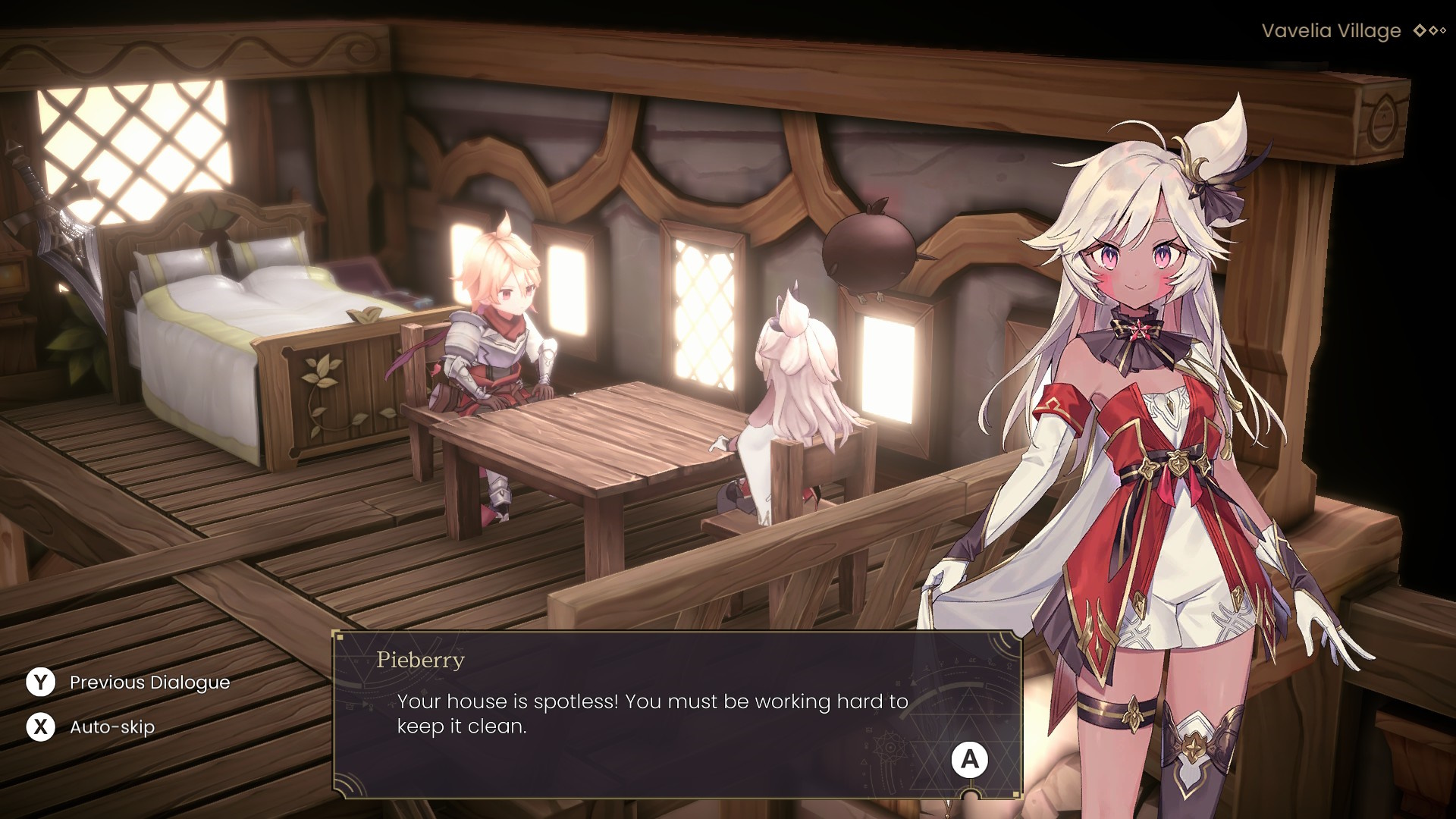
Although the epilogue provides plenty more hours of content, much of that content feels hollow. I'd spent the last 30+ hours befriending and getting to know these characters. The epilogue was the perfect chance for last-minute conversations, developments, and goodbyes before I set the game down for good, but when all a side character does is sit inside a house and ask me to fight a giant dragon I'd already fought numerous times, the denouement comes across as uninspired and low-effort.
Despite the two-year gap between the main game's release and the epilogue's, little hints here and there make me wonder if it wasn't cobbled together and rushed out in a couple months. The epilogue has a healthy dose of new enemies, but they're all pathetically weak. Only two or three new bosses were able to sink their fangs into me. Usually, post-game content has enemies that're so frighteningly strong, the final boss would drop a brick in his trousers just looking at them, but for some reason, WitchSpring R takes the opposite approach.
WitchSpring 3 was rather rife with bugs that'd crawl out of numerous holes, but WitchSpring R is much cleaner and neater, the only real bug being a split-second harmless display of some extra menus when loading in the teleportation map. R's biggest performance issue came in battles, when it would freeze momentarily executing attacks with lots of particles. But during the epilogue, a few of the seams R had stitched up from 3 were coming apart. One sidequest hands you a key that unlocks a gate in a cave. However, if you unlock this gate, leave the cave, and reenter, the gate will relock, and the prompt to unlock it is gone forever. That nearly softlocked me out of completing this sidequest, forcing me to reload a previous save. I tested this on reload, and the same bug reappeared, so it seems there's something embedded in the code, or possibly missing, that's preventing this door from remaining open once the boolean for its unlocking is triggered. Another bug is that in the epilogue's final dungeon, an Elegy of Emptiness shell of my pet spawned in and wouldn't despawn, so I spent the next several hours haunted by its silhouette phasing through terrain.
After numerous paragraphs of pressing on sour points, I should emphasize that this is all cherrypicking isolated instances where I feel R stumbles astray. Much like 3 before it, it has the habit of doing something superbly only to alter that formula for one or two things. While a shakeup of a gameplay formula can lead to a game's most memorable moments—see Eventide Island in Breath of the Wild—the WitchSpring games struggle with shakeups that are memorable in a way other than confounding or vexing. Yet, even though I can devote lengthy paragraphs to complaining about them, in-game, they're tiny pinpricks in an otherwise superb experience.
Conclusion
By almost every measure, WitchSpring R is better than WitchSpring 3. It has better art direction, better combat, better designs, better characters, a better story, a better translation, better charm, better SFX, better polish. It's what a successor should be. The one leg 3 has up is its training regimens. Even so, I did deliberate throughout my R playthrough which title I preferred. While R is the objectively better game, I clicked with 3 first and better. The winner of this competition came down to how I felt after completing the last thing there was to do in R, and that was sad. I was said to be putting R down.
Normally, the feeling that comes over me when finishing a game is relief, not because I've come to dislike that game, but because I'm fatigued of it and just want to move on to the next title. But not with R. I wanted to keep playing R, keep finding new recipes to craft, new weapons to try out. I wanted to keep palling around with all the friends I made around the continent and see and live the peaceful days now that the big bad was gone. I wanted it all, and for a short spell, I had it all.
Rather than continuing to type out this word and that term about what a phenomenal game R is and how attached to its world, story, and characters I got, I'm going to show you a screenshot, and I want you to take a good look at it.

This image is of Pieberry and another witch racing. It's a brief scene from the credits sequence. Shortly after I snapped this photo, the witch atop the wolf declares that she absolutely won't lose this race. This screenshot is exactly how WitchSpring R makes me feel. So full of glee, joy, and happiness that I have the privilege of being alive and getting to experience fantastic works of art like WitchSpring R, WitchSpring 3 before it, and what KIWIWALKS has in store for fans next. They're games I absolutely won't be forgetting.

Just writing about the video games that tickle my fancy when the fancy strikes.
posted by Majkol Robuschi on 25 Feb 2026
posted by Ross Locksley on 23 Feb 2026
posted by Ross Locksley on 20 Feb 2026

posted by Eoghan O'Connell on 19 Feb 2026

posted by Jared T. Hooper on 17 Feb 2026

posted by Ross Locksley on 11 Feb 2026
posted by Eoghan O'Connell on 04 Feb 2026

posted by Ross Locksley on 03 Feb 2026